

You may have seen or heard about the new Dietary Guidelines for Americans and wondered what they mean for school nutrition programs. For school nutrition teams, the questions are usually the same: What are the Dietary Guidelines? Who decides them? And will anything change for school meals?
What are the Dietary Guidelines for Americans?
The Dietary Guidelines for Americans (DGAs) are science-based nutrition recommendations published by the U.S. Department of Agriculture (USDA) and the Department of Health and Human Services (HHS). The first edition was released in 1980, and the guidelines have been updated every five years since.
- Federal nutrition policy
- Nutrition education
- Federal food and nutrition assistance programs
The guidelines are developed through a review of current scientific research. The Dietary Guidelines Advisory Committee (DGAC) reviews available nutrition science and submits a report. USDA and HHS use this information to create the final guidelines, based on the best available research at the time.
The guidelines are not rules or laws. They are recommendations based on research, and people are not required to eat a certain way because of them. However, they do play an important role in shaping food and nutrition programs across the country.
What’s New in the Dietary Guidelines for Americans?
The new DGAs put an emphasis on eating real food. They highlight the importance of prioritizing high-quality protein, fruits, vegetables, dairy, healthy fats, and whole grains.
As part of this focus on whole foods, the guidelines recommend limiting highly processed foods, added sugars, artificial flavors, petroleum-based dyes, and artificial preservatives. While grains are still included as part of a healthy diet, refined carbohydrates should be consumed in minimal quantities.
- Middle Childhood (5-10 years) – Full-fat dairy products are discussed as an option to help meet energy needs and support brain development.
- Adolescence (11-18 years) – Increased needs for energy, protein, calcium and iron.
The DGAs are represented using an inverted food pyramid graphic, replacing the MyPlate graphic that had been used since 2011.
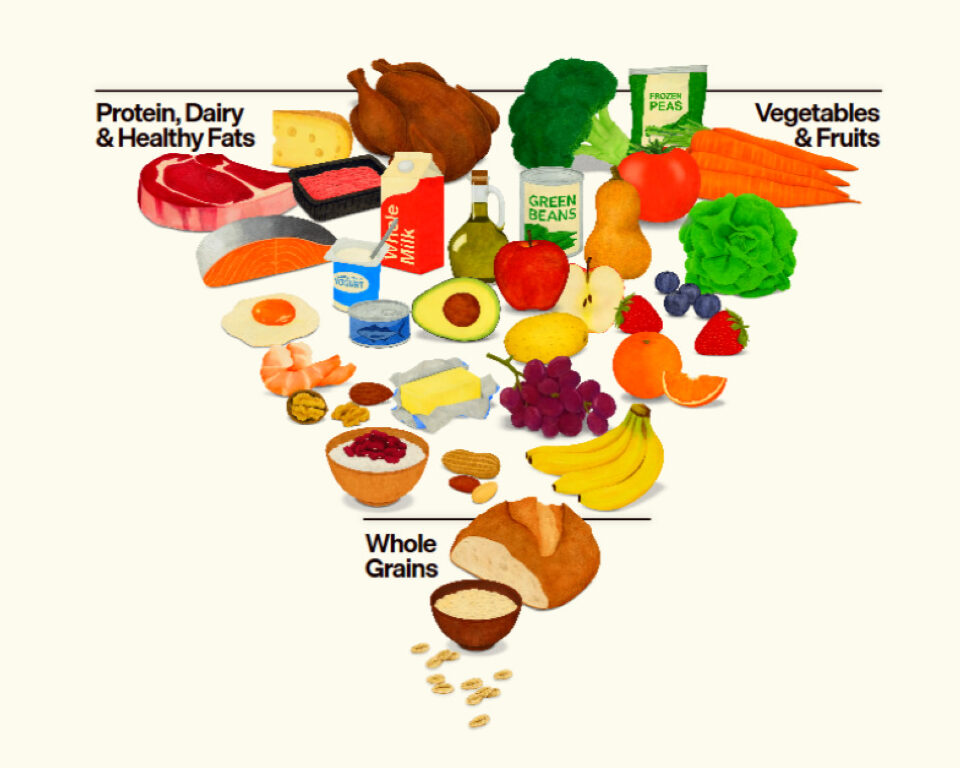
To help explain the guidelines in a simpler way, the federal government created realfood.gov. This website shows the guidelines in a more visual and easy-to-understand way.
Why the Dietary Guidelines Matter for School Nutrition Programs
- National School Lunch Program (NSLP)
- School Breakfast Program (SBP)
- Child and Adult Care Food Program (CACFP)
When USDA updates meal pattern requirements or nutrition standards, those updates are based on the Dietary Guidelines. The guidelines influence things like whole grain requirements, allowing protein at breakfast, sodium targets, saturated fat and added sugar limits, milk options, and more.
The Whole Milk for Healthy Kids Act (S.222) was recently signed into law, giving schools more flexibility to offer whole and reduced-fat milk as part of the NSLP. This update reflects how school meal regulations can evolve alongside changes in nutrition guidance and federal policy. For more information about the new milk regulations, check out our blog post.
What School Nutrition Professionals Need to Know
The release of the updated DGAs does not mean an immediate change to school nutrition programs. But it’s important to note that changes could come later. The guidelines are helping to set the direction for future updates.
When the USDA makes a change to school nutrition program regulations, the School Food Authorities (SFAs) are usually given time and support to prepare for the changes. Watching for USDA guidance and state agency updates can help programs plan ahead.
Key Takeaways
The Dietary Guidelines for Americans are the foundation of federally funded nutrition programs. Understanding what the guidelines are, how they are developed, and how they affect child nutrition programs can help school nutrition professionals stay prepared and plan ahead for future updates.