
School nutrition programs do more than just serve meals. They support student success by helping students build healthy habits and teaching valuable lessons about food, nutrition, and wellness. With support from teachers, administrators, and families, these programs reach students in impactful ways.
Picture a third-grade class tasting radishes for the first time after harvesting them from their school garden and discovering that they like them. Or imagine a high school student scanning a QR code on their lunch menu and learning about the local farm that grew their apples.
These moments might seem small, but they are powerful examples of nutrition education in action. They happen not only in the cafeteria but also in the classroom, the garden, and the community.
Incorporating Nutrition Education in the Classroom
One of the easiest places to start is in the classroom. It’s important for teachers and administrators to see that incorporating nutrition is a team effort that can happen in small moments throughout the school day.
- Math: Use food examples to practice addition, subtraction, and calculating costs, or create graphs showing the sugar content in different snacks.
- Science: Teach how the body turns food into energy or how plants grow through photosynthesis, and introduce the five basic tastes — sweet, sour, salty, bitter, and umami.
- Language Arts: Read stories about fruits and vegetables, have students write persuasive essays about their favorite foods using the five senses, or describe the steps for making a simple recipe like a peanut butter and jelly sandwich.
- Social Studies: Connect lessons about geography and culture to what’s on the menu by serving foods like Pad Thai when learning about Thailand or Ratatouille when learning about France.
- Health: Use dietary guidelines and nutrition labels to talk about how food fuels the body, and try activities like a “Sugar Shock” lesson showing the sugar in common drinks or a discussion after watching Super Size Me.
How School Nutrition Professionals Can Help Teachers
School nutrition programs can work closely with teachers to make nutrition a natural part of learning.
One simple way to support their work is by providing ready-to-use materials such as PDFs, handouts, worksheets, and slides from trusted sources like USDA’s Team Nutrition, the Institute of Child Nutrition (ICN), and the School Nutrition Association (SNA). Fun facts, infographics, or short talking points related to the daily menu can also help teachers include nutrition in everyday conversations.
Bringing the school garden into classroom lessons or inviting teachers to join garden activities gives students a hands-on way to connect with healthy habits. Nutrition education can also feel more manageable when teachers have access to simple games, adaptable lesson plans, or short co-led activities.
Collaborating on projects or themed events, such as Harvest of the Month or cultural food days, can increase student engagement in classrooms. You could even attend staff meetings to introduce ways nutrition supports learning and show teachers that you’re a resource. Small actions like offering cafeteria tours or behind-the-scenes days can spark connections between food and education.
Farm-To-School Programs & School Gardens
Farm-to-School programs help students understand where their food comes from by connecting them with local farms and farmers’ markets. Hands-on experiences such as a field trip to a local farm or a classroom visit from a farmer help bring learning to life and help students build a stronger connection with their food.
School gardens are another powerful tool for nutrition education. When students plant, grow, harvest, and taste food they’ve helped produce, they get firsthand experience that supports healthy habits. It’s a fun and interactive way to explore nutrition while learning about seasonal and locally grown produce.
Seeing their harvest served in the cafeteria or featured in a taste test can be a turning point. Students feel proud of what they’ve grown, and they’re often more open to trying new foods.
Starting a school garden might seem overwhelming, but it doesn’t have to be. In our Farm-to-School webinar, Lauren Couchois shares practical strategies for starting small and getting the whole school involved. Begin by asking what the purpose of your garden will be. Maybe it’s to help students learn where food comes from or to create a hands-on learning space. Whatever the goal, finding your “why” is a great first step.
Support from principals, teachers, and district staff is essential. Invite them to visit the garden so they can see the impact for themselves. You can also reach out to your PTA or local community partners to get help with volunteers or funding.
Try finding simple ways to tie the garden into what students are already learning. It could be measuring plant growth in math class, writing about what they see in the garden during English class, or talking about nutrients in health class. When nutrition staff and teachers work together, the garden becomes more than a side project. It becomes part of the school day and a fun, hands-on way for kids to learn about food and healthy habits.
Themed Activities and Events
Themed events like National School Breakfast Week, National School Lunch Week, and National Farm-to-School Month are fun ways to get students and staff excited about nutrition. Think of them like a Spirit Week, but with a healthy twist. Decorations, activity sheets, themed meals, games, and even costumes can bring energy and creativity to these annual celebrations.
School nutrition teams can support these events by providing materials like activity sheets, coloring pages, or quick classroom resources. Snack tastings, guest visits, and short classroom activities are great ways to get kids involved. Keeping activities short and flexible, around 10–15 minutes, makes them easier for teachers to fit into the day.
Staff and administrator participation really makes a difference. When they join in by decorating, dressing up, or participating in themed meals, it shows students that nutrition is something to be celebrated by everyone. Coordinating with teachers and administrators early on can help everything go more smoothly.
You can also incorporate classroom competitions, morning announcements, small prizes, or social media shout-outs to boost engagement. For example, during National School Lunch Week, classrooms could decorate their doors to match the theme. The class with the best door could win a pizza party. These small touches help build excitement and create a sense of community around school meals.
Community and Family Involvement
Nutrition education doesn’t stop at the school doors. It continues at home and throughout the community. When families are included, students are more likely to carry those healthy habits beyond the classroom.
Simple efforts like adding nutrition tips or easy recipes to school newsletters can spark conversations at home. Hosting family-friendly events such as taste tests, cooking demos, or wellness nights gives parents a chance to see what their children are learning and try new foods together.
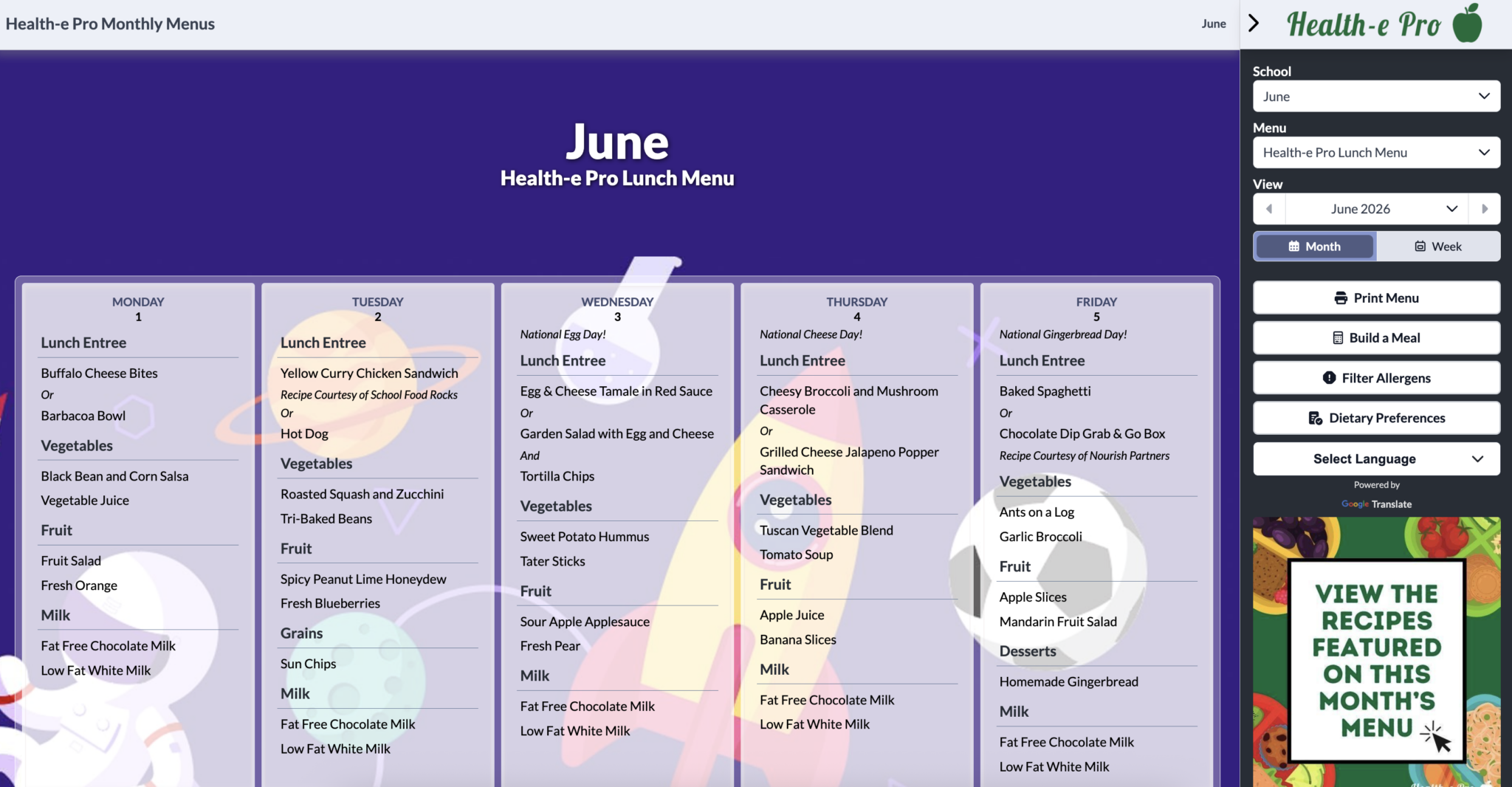
Online menus are another great tool for family engagement. With Health-e Pro’s online menus, families can quickly see what’s being served and check nutrition facts and allergens from any device. This helps them make informed choices and feel more confident about school meals. Check out the monthly menu for inspiration!
Community events can reinforce the messages students are already hearing in school and create excitement around healthy eating. Social media is also a powerful way to get the community involved. Sharing behind-the-scenes photos, taste test reactions, new menu items, or fun cafeteria moments helps tell your program’s story. It helps families feel more connected and turns your school meals into something people look forward to.
Health-e Pro customer Greenville Public Schools Nutrition Services is a great example. They use social media to show what’s really happening in their cafeteria. Their posts are fun, relatable, and engaging. They aren’t just promoting their program; they’re building a sense of community and pride around it.
Conclusion: Teamwork Makes the Dream Work!
What happens in the cafeteria is just one piece of the puzzle. Nutrition education works best when it is supported throughout the entire school day, in classrooms, gardens, events, and the community. When teachers, administrators, families, and school nutrition professionals work together, students are more likely to build healthy habits that stick.
Every interaction counts; whether it’s a taste test in the lunch line, a quick classroom activity about balanced meals, or a fun photo shared on social media, these small moments make a lasting impact. They shape how students think about food, wellness, and the choices they make.
The best part is that you don’t have to do it alone. Collaboration is what makes these efforts possible. When schools and communities come together, nutrition becomes more than just a lesson. It becomes part of how students grow and thrive every day.
Resources
- USDA Team Nutrition Garden Resources
- Team Nutrition Popular Events Idea Booklet
- The Dietary Guidelines for Americans
- Nibbles for Health: Nutrition Newsletters for Parents of Young Children
- ICN Nutrition Education Materials
- School Meals Program Information for Parents
- Read the Label Youth Outreach Materials
- Science and Our Food Supply – Free Supplementary Curriculum for Middle Level and High School Classrooms
- More Than a Menu: Transforming School Menus into Nutrition Education Video