
Health-e Pro Menu Software
For Puget Sound Joint Purchasing CooperativeLooking to streamline your menu planning? Health-e Pro offers the best, most powerful menu planning software on the market, so you can save time, save money, and stay compliant. What’s even better: the Puget Sound Joint Purchasing Cooperative (PSJPC) has purchased this software for you, so it’s FREE to you.
- US Foods Bid Items with Co-op pricing
- Global Recipe database of 5,000+ recipes (and growing!)
- Menu Planning and Compliance
Live Training Opportunities
Join us for an overview of Health-e Pro Menu Planning Software and other modules. Each session provides the same content with opportunity for Q&A at the end.
June Sessions
6/3, 6/10, 6/17, 6/24
August Sessions

8/5, 8/12
Additional Modules Available For Purchase
Add Production Records Today!
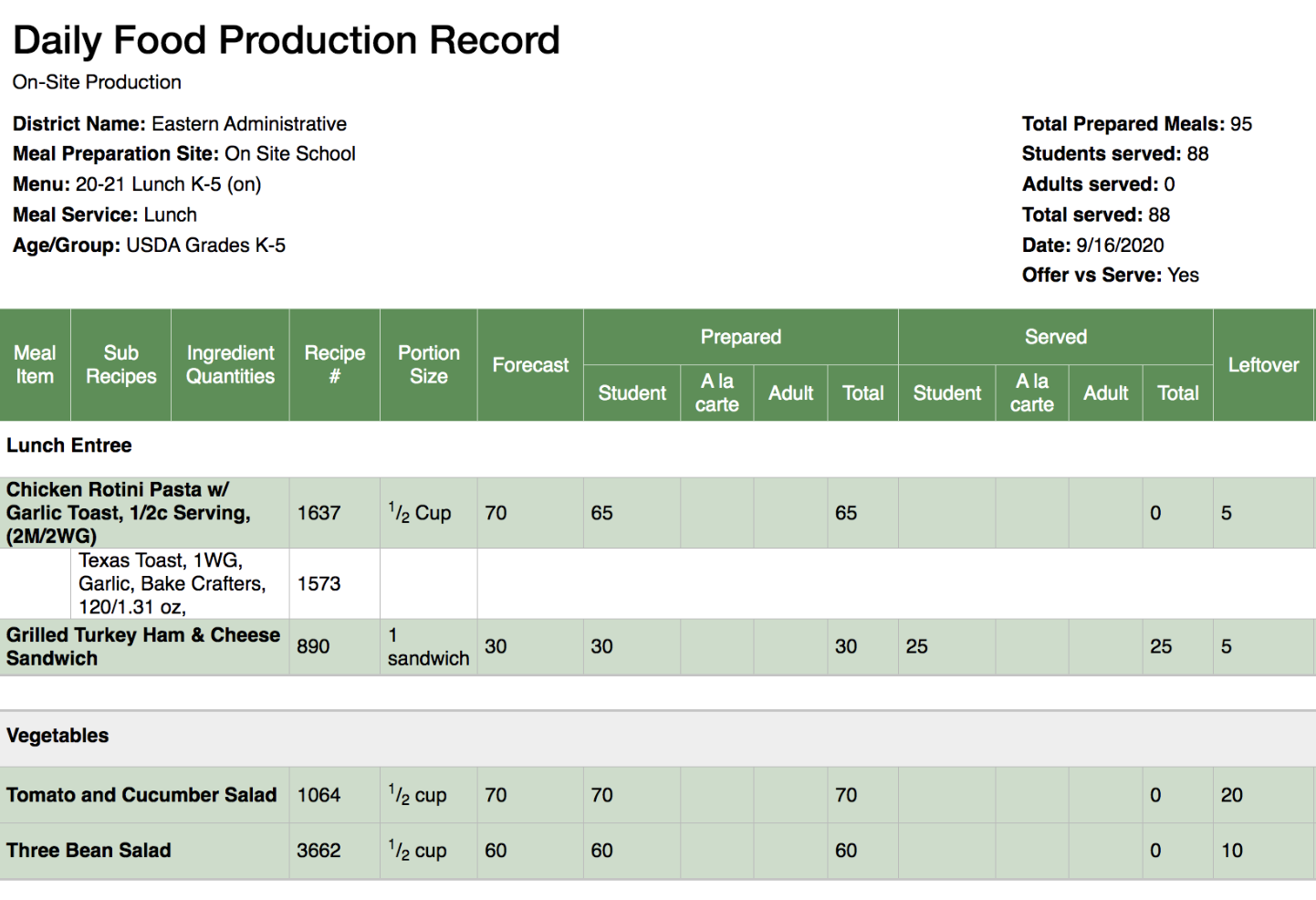
The Production Module allows for forecast, prepared and served data to be entered by school for each menu item. Production is cloud-based and therefore does not require printing of records to send between receiving kitchens or administration. Going paperless has never been so easy!
Add My School Menus Today!
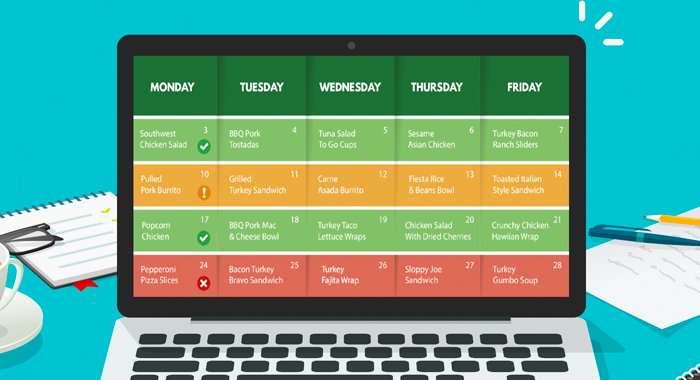
My School Menus by Health-e Pro provides one-click publishing of the menus you create in our menu planning software. With customizable graphics and sidebars, you can easily make eye-catching menus that you can publish in seconds. Your students and parents can filter by allergen or attribute quickly, accessible from anywhere–on any device.

Add My School Menu Boards Today!
My School Menu Boards provides an easier way to manage and display menus on digital displays at all of your sites. Within My School Menu Boards, digital cards can be created to present menus in your cafeteria.
Here are some of the most Frequently Asked Questions we’ve received from districts. Click on the box to view the answer.
Why Mobile Pokies Have Reshaped Australian Online Gaming, Says Casinozoid
The shift toward mobile-first gaming in Australia has not been gradual — it has been decisive. Over the past decade, the proportion of online casino activity conducted via smartphones and tablets has grown from a niche segment into the dominant channel, fundamentally altering how operators design products, how regulators frame policy, and how players engage with games like pokies. Australia’s particular relationship with electronic gaming machines, deeply embedded in pub and club culture since the 1990s, made the transition to mobile pokies culturally intuitive even when the technology itself was still maturing. What began as a convenience feature has become the primary interface through which millions of Australians access online gaming content.
The Technology Inflection Points That Drove Mobile Adoption
Mobile pokies did not become viable overnight. The early attempts at mobile casino gaming, roughly between 2005 and 2010, were hampered by the limitations of WAP-based browsers, small screen resolutions, and slow data connections. Games were stripped-down versions of their desktop counterparts, often with reduced reel counts and no bonus features. The experience was functional at best and frequently frustrating. The real transformation came in two distinct waves.
The first wave followed the widespread adoption of smartphones with capacitive touchscreens from 2010 onward. Apple’s App Store and the Android ecosystem created distribution channels that bypassed the browser entirely, and game developers began building titles specifically for touch interaction rather than adapting mouse-and-keyboard interfaces. Studios like Microgaming and NetEnt released dedicated mobile variants of their flagship titles, though these were still separate builds maintained alongside desktop versions.
The second and more consequential wave came with the industry-wide adoption of HTML5 between 2012 and 2016. HTML5 allowed developers to create a single codebase that rendered correctly across devices, eliminating the need to maintain parallel versions of each game. This dramatically reduced development costs and accelerated the pace at which new titles reached mobile platforms. By 2017, most major software providers were releasing games as mobile-first products, with desktop compatibility treated as secondary. Australian players benefited directly from this shift, gaining access to the same feature-rich pokies — cascading reels, expanding wilds, multi-level bonus rounds — that had previously been exclusive to desktop environments.
Network infrastructure played an equally important role. The rollout of 4G LTE across Australian metropolitan areas between 2012 and 2015 provided the bandwidth and latency consistency that real-time gaming requires. The subsequent expansion of 4G into regional areas, and the early deployment of 5G in major cities from 2019 onward, extended reliable mobile gaming access to a much broader geographic base. Australia’s relatively high smartphone penetration rate — consistently above 80 percent among adults throughout the 2010s — meant there was an established hardware base ready to absorb these network improvements.
Regulatory Context and Its Influence on Mobile Pokies
Understanding why mobile pokies have reshaped Australian online gaming requires engaging with the regulatory environment, which has been neither static nor straightforward. The Interactive Gambling Act 2001 (IGA) established the foundational legal framework, prohibiting the provision of certain interactive gambling services to Australian residents. However, the IGA was drafted before smartphones existed in their current form, and its application to mobile gaming has been subject to ongoing interpretation and amendment.
A significant development came with the Interactive Gambling Amendment Act 2017, which strengthened enforcement mechanisms and clarified that in-play sports betting via mobile was prohibited. For casino-style games including pokies, the legal position remained that offshore operators were technically prohibited from offering these services to Australians, yet enforcement against individual players was not pursued. This created a persistent grey market in which offshore-licensed platforms continued to serve Australian users, including through mobile channels, while domestic operators were restricted from offering real-money online casino products.
The Australian Communications and Media Authority (ACMA) has used website-blocking powers granted under the 2017 amendments to target unlicensed offshore operators, blocking hundreds of domains since 2019. Yet the practical effect on mobile access has been limited, as players using offshore platforms typically access them through mobile browsers rather than dedicated apps, making circumvention straightforward. This regulatory dynamic has meant that the mobile pokies market serving Australian players has largely developed outside the domestic licensing framework, shaped more by the standards of Malta Gaming Authority or UK Gambling Commission-licensed operators than by Australian-specific rules.
Industry observers, including analysts at Casinozoid online, have documented how this regulatory gap has influenced product development, with offshore operators targeting Australian players through mobile-optimised platforms that offer game libraries and promotional structures unavailable from domestically compliant providers. The contrast between what Australian players can access offshore versus what domestic regulation permits has become a recurring point of tension in policy discussions about potential domestic licensing frameworks.
How Mobile Design Has Changed the Pokies Product Itself
The migration to mobile has not simply relocated the same product to a smaller screen. It has driven substantive changes in how pokies are designed, structured, and monetised. These changes are visible across several dimensions of the product.
Game mechanics have been simplified and then re-complexified in ways specific to touch interaction. Early mobile pokies reduced the number of paylines and bonus features to keep the interface manageable on small screens. As screen sizes increased with larger smartphone models — the average screen size of flagship Android devices grew from approximately 4 inches in 2011 to over 6.5 inches by 2020 — and as developers became more proficient with touch-optimised UI design, games recovered and then exceeded their former complexity. Features like hold-and-spin mechanics, which require players to make decisions during bonus rounds, became more intuitive on touchscreens than they had been with mouse clicks.
Session length and betting behaviour have also shifted. Mobile gaming tends to produce shorter, more frequent sessions compared to desktop play. Operators and game developers have responded by designing pokies with faster base game cycles and bonus features that trigger more frequently but with smaller average payouts per trigger. This keeps engagement high across brief sessions without requiring extended continuous play. The autoplay feature, once a staple of desktop pokies that allowed players to set a predetermined number of spins, has been progressively restricted across multiple jurisdictions and by many operators voluntarily, partly in response to concerns about mobile gaming’s compatibility with responsible gambling principles.
The visual and audio design of mobile pokies has evolved to account for the contexts in which mobile gaming occurs. Players on mobile are frequently in environments where audio is unwanted — public transport, workplaces, shared spaces — leading developers to ensure that games remain fully engaging with sound muted. Visual feedback through animation and haptic response has compensated for the reduced role of audio. Game themes have also trended toward simpler, higher-contrast visual styles that read clearly on smaller screens and in varying lighting conditions, a departure from the highly detailed, cinematic aesthetics that characterised premium desktop titles in the early 2010s.
Payment integration has been another area of significant mobile-driven change. The adoption of digital wallets — including Apple Pay, Google Pay, and cryptocurrency options — has been accelerated by mobile gaming demand. Players who access pokies on mobile expect the same frictionless payment experience they use for other mobile purchases. Operators serving Australian players have invested in payment infrastructure that supports rapid deposits and withdrawals through mobile-native methods, reducing the friction that previously characterised online casino banking.
Market Behaviour and Player Demographics in the Mobile Era
The demographic profile of Australian online pokies players has shifted alongside the technology. Research conducted by the Australian Institute of Family Studies and various state-level gambling authorities throughout the 2010s consistently identified electronic gaming machine players as skewing older, with peak engagement among adults aged 40 to 60. Mobile gaming has introduced a younger cohort, with players in the 25 to 40 age bracket representing a growing proportion of online pokies activity. This demographic is more comfortable with mobile-first digital products, more likely to use cryptocurrency for transactions, and more responsive to the social and competitive features that some modern pokies incorporate.
Geographic patterns have also changed. Land-based pokies in Australia are heavily concentrated in New South Wales, which accounts for approximately half of all gaming machines in the country, with Victoria and Queensland representing most of the remainder. Mobile pokies have no such geographic constraint, and data from operators suggests that engagement from regional and rural areas of Australia has grown disproportionately as mobile network coverage has improved. For players in areas without proximate pokies venues, mobile platforms represent the primary access point to this form of gaming rather than an alternative to physical venues.
The competitive dynamics among platforms serving Australian mobile pokies players have intensified as the market has matured. Casinozoid has noted that the differentiation between operators has increasingly shifted from game library size — most major platforms now offer hundreds to thousands of titles — to factors like mobile interface quality, payment speed, and customer support responsiveness. Platforms that invested early in native mobile experiences rather than responsive web adaptations have maintained user retention advantages that persist even as competitors have upgraded their technology.
Live dealer games, while not pokies in the traditional sense, have become an important part of the mobile casino ecosystem and have influenced player expectations for pokies products. The normalisation of high-quality video streaming through mobile devices has raised the visual standard that players apply to all casino content. Game developers have responded with higher-resolution assets, smoother animation framerates, and more sophisticated audio design — improvements that benefit the mobile pokies experience even as they were driven partly by competition from live dealer formats.
The reshaping of Australian online gaming by mobile pokies reflects a convergence of technological capability, regulatory circumstance, and cultural predisposition. Australia’s existing familiarity with electronic gaming machines created a ready audience for digital equivalents, while the specific constraints of domestic regulation pushed that audience toward offshore mobile platforms that were, in many respects, technically superior to what a domestically licensed market would have produced under more restrictive frameworks. The result is a mobile gaming market that is sophisticated, deeply embedded in daily digital behaviour, and increasingly difficult to address through the blunt instruments of domain blocking and platform prohibition. Whether domestic policy evolves to create a licensed framework that can compete with offshore mobile offerings remains the central unresolved question for the industry in Australia.
What are the advantages of joining the co-op account?
You will receive updated co-op bid items and pricing.
What information is available in the co-op account?
All co-op bid items, product documentation/nutrition fact labels, distributor, distributor code, purchase unit, purchase unit cost and net weight are included.
Can anyone else see my Health-e Pro data?
Yes, the PSJPC Health-e Pro account administrator.
What happens to my current ingredient pricing if pricing is shared from the co-op account?
Co-op pricing that is shared will override your pricing on global ingredients.
Who is keeping the co-op ingredient pricing information up to date?
Premier Purchasing and US Foods.
Will the PSJPC account be uploading only ingredients from the bid? Or will we have ingredients that are off bid too?
To the best of our knowledge, PSJPC will only be including items on the bid. The user can enter anything off bid in their account.
How will they upload pricing to us when we are all on different tiers?
The appropriate pricing for your tier will be uploaded to your account.
What will the ingredient titles look like? Can we edit the titles?
At this time, all of the ingredients are Global ingredients so they have Health-e Pro standard titles. If for some reason, a global ingredient can’t be used, PSJPC will use the same format used by Health-e Pro. The US Foods number is included in the Ingredient Pricing details but not the title of the Ingredient. As with any Global ingredient, the user cannot edit the title.
Which part of the ingredient will be editable by the district? Will our changes be overridden each time?
Users can edit the Pricing fields in your local account, however, they will be overwritten when the pricing is updated by PSJPC.
Will we be able to change or add weights and measures?
Since these are Global ingredients, the user cannot add or change weights and measures. As with all Global ingredients, you can contact Support and request changes to a Global ingredient and we will accommodate if appropriate.